
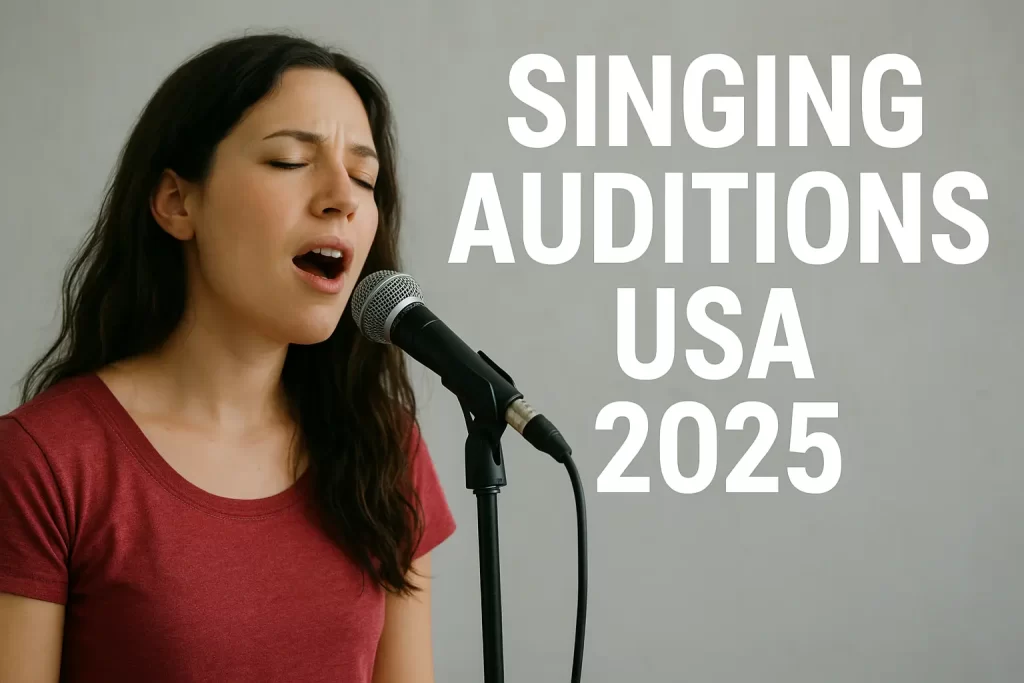
First, congratulations — deciding to audition is the best way to make real progress as a singer. Whether you want a role in a musical, a spot on a TV show, or a recording opportunity, auditions give you exposure, feedback, and momentum. Moreover, auditions in 2025 are a blend of in-person callbacks and short, sharp online submissions. Therefore, you need both musical skill and clear presentation. Below you’ll find step-by-step instructions for finding auditions, preparing audio/video clips, and performing live with confidence.
Where to Find Singing Auditions (Online & Nearby)
First, aim for a mix of far and near opportunities. Next, keep a running list so nothing slips.
- Major casting sites: Check Backstage, Playbill, Casting Networks, and Mandy for musical theatre and on-stage singing roles.
- TV & reality show sites: Visit official show portals for submission forms and deadlines.
- Local theaters and schools: Community theaters, university music departments, and conservatories post casting notices on their websites and social channels.
- Music-focused platforms: Sites like ReverbNation, Sonicbids, and local Facebook groups list open calls, gigs, and contests.
- Social media & YouTube: Follow casting accounts, producers, and local venue pages—open calls and virtual contests are often shared there.
- Libraries & community centers: Noticeboards sometimes list choirs, musicals, and free audition workshops.
Consequently, combine national listings with neighborhood searches like “singing auditions near me” to capture both big and local chances.
Online Audition Submissions — A Step-by-Step Workflow
Step 1 — Read Instructions Carefully
First, read the audition notice twice. Next, note time limits, allowed file types, and any song or style requirements. Then, mark the submission deadline on your calendar.
Step 2 — Choose a 30–60 Second Cut
After that, select a short portion of a song that shows your best tone, range, and emotional strength. In addition, avoid overly common choices that casting directors hear every season.
Step 3 — Record Clean Audio and Video
First, find a quiet room with soft surfaces to reduce echo. Next, use a good microphone (USB condenser is often enough) and set the camera at eye level. Also, wear simple clothes and position yourself against a neutral background. Then, film 2–3 takes to pick the strongest one.
Step 4 — Edit Lightly and Label Correctly
Trim lead-in silence and export using the requested format. Moreover, name your file exactly as the instructions require (for example, Lastname_Firstname_Song.mp4). Finally, attach a short bio (one line: name, city, notable credits) if requested.
Step 5 — Submit Early
First, upload before the last 24 hours to avoid portal crashes. Also, keep screenshots of the confirmation page and email for your records.
Preparing for In-Person Auditions
What to Bring
- A printed headshot and short resume.
- A reliable backing track on USB, phone, or sheet music for an accompanist.
- Valid photo ID and any audition confirmation forms.
- A water bottle and at least two warm-up phrases printed.
How to Warm Up and Present Yourself
First, warm up with lip trills and gentle scales for 20–30 minutes. Then, do breathing exercises and light stretches to release tension. Next, choose clothing that’s comfortable but polished — avoid loud patterns. Finally, when you step in front of the judges, smile, breathe, and treat the first line as your most important line.
Choosing the Right Audition Song
For Musical Theatre
Pick a one-minute cut that reveals character and range. For instance, choose a short lyric that lets you act through the phrase.
For Pop/Commercial Auditions
Select a contemporary cut that highlights tone and personality without excessive runs. Also, an intimate delivery often reads better on camera.
For Jazz or Standards
Use a stylized, concise version of a standard to demonstrate phrasing and interpretive skill.
For Country/Americana
Tell a story. Choose songs that show clarity of diction and emotional honesty.
In short, the best choice is the song that fits your voice and lets you inhabit the lyrics.
How to Pass a Singing Audition — Practical Habits
- Be coachable: If the director asks for adjustments, respond immediately and positively.
- Know your music: Be ready to change key or repeat sections.
- Tell a story: Shape each phrase — audition panels remember storytellers.
- Control your breathing: Measure breaths to avoid uneven phrases.
- Mind small details: Clean consonants, steady vowel shapes, and consistent dynamics matter.
Therefore, talent plus adaptability is often the deciding factor.
People Also Ask — Quick, Honest Answers
How do you audition for singing?
Choose a strong 30–60 second cut, record a clear clip or prepare a live cut, follow submission rules, warm up thoroughly, and be ready to take direction. Then, submit early and bring backups for in-person calls.
Is 18 too old to start singing?
Not at all. Many successful singers begin formal training as adults. With focused practice and good instruction, significant progress is possible within months.
How to pass a singing audition?
Pick appropriate material, prepare technically and emotionally, demonstrate musicality and breath control, and show you can take direction. Above all, remain professional and composed.
What is the best song to sing in an audition?
The best song is one that sits comfortably in your voice, reveals your strengths within 30–60 seconds, and connects emotionally. Practically, prepare a few short cuts to fit different audition needs.
Fees, Free Practice Spaces, and Red Flags
- Typical private lesson rate (USA): $30–$80 per hour depending on location and teacher.
- Group classes & workshops: Often more affordable and useful for stage experience.
- Free practice/performance: Community centers, university open mics, and local churches frequently offer free slots.
- Red flag: Any audition requiring large up-front payment to “be seen” is suspicious — legitimate productions rarely charge to audition.
Quick Checklist — Ready to Submit
- Song cut (30–60 sec) prepared.
- Quiet, well-lit recording space.
- Good microphone and camera setup.
- File named as required.
- Short bio included.
- Confirmation screenshot saved.
- Backup files on USB/cloud.
Final Encouragement — Keep Auditioning, Keep Growing
Finally, auditions are practice as much as they are selection. Each audition sharpens your timing, confidence, and presentation. Moreover, persistence commonly outweighs one-off perfection. So, keep preparing, submit thoughtfully, and treat every audition as a step forward. With clarity, consistency, and heart, your next audition could be the one that opens the door.